Image Link Building: We Found 12 Copies of 5 Famous SEO Charts. Half Gave No Followed Link

We went looking for copies of five well-known SEO charts from Ahrefs, Backlinko and Moz. Of 12 pages that showed one, 6 linked back with a followed link, 3 linked with nofollow and 3 gave no link at all. Here is how to find copies of your own images, what to ask for, and why most guides skip the parts that decide whether the link counts.
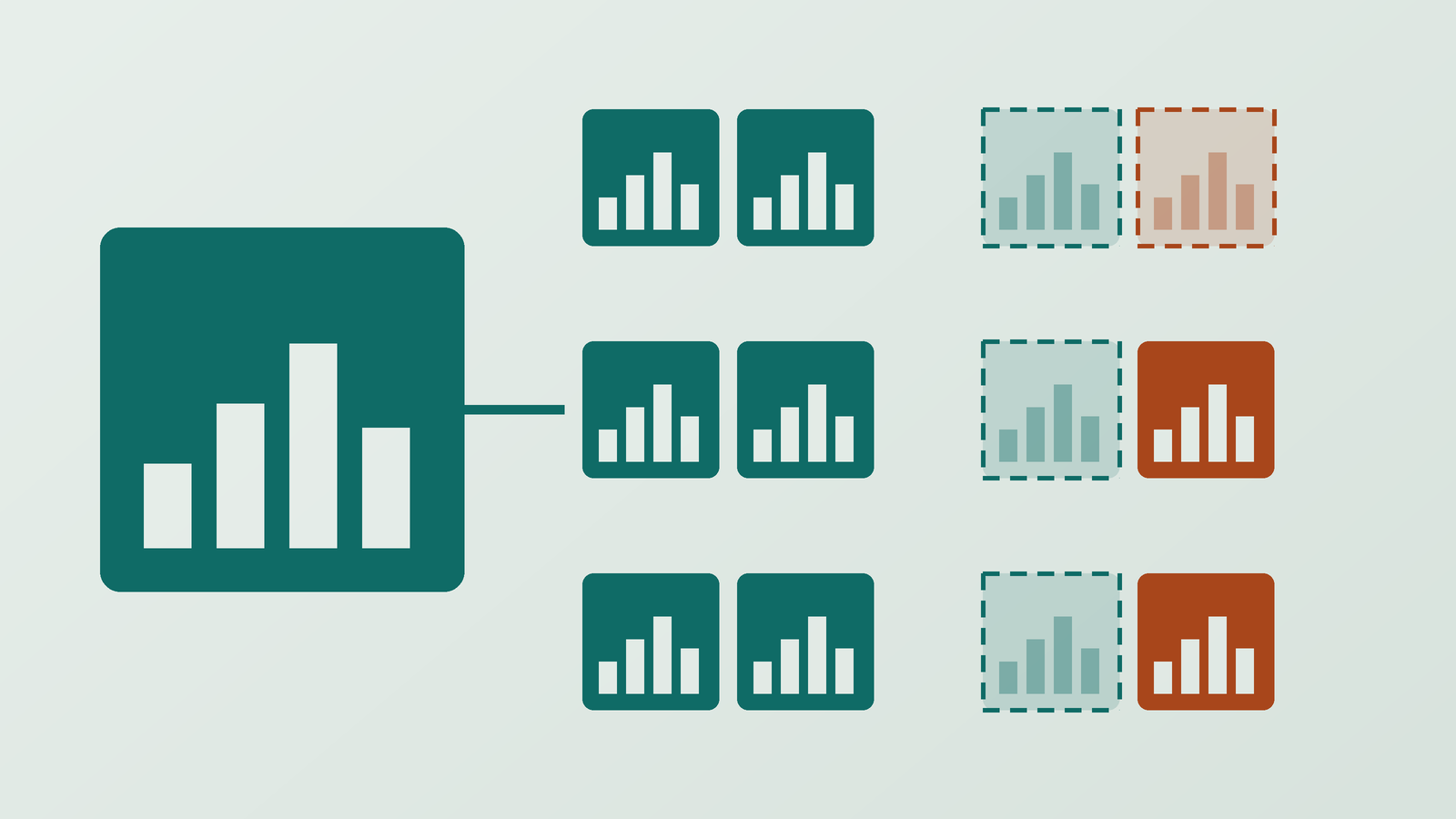
Image link building means finding sites that already use your images, charts or photos and asking them to credit you with a link. It works because the hard part, getting someone to use your work, has already happened. To see how often that credit is missing, we went looking for copies of five well-known SEO charts. Of the 12 pages we found showing one, 6 linked back with a followed link. The other 6 either used nofollow, named the source without linking, or gave no credit at all. Those six are the opportunity.
In a hurry? The five steps: list your most reused images, find copies with a reverse image search, check each copy's credit and its rel attribute, send a short request that names the exact image, then track what changes. Each step is explained below.
On November 4, 2026 we looked at:
- Five original charts that SEO writers reproduce constantly: Ahrefs' "96.55% of pages get no traffic from Google" pie chart, Ahrefs' average age of top-ranking pages, Backlinko's organic click-through rate by position, Backlinko's average word count of top-10 results, and Moz's Search Demand Curve.
- 86 third-party pages that discuss those findings, fetched and read in their raw HTML for the image, the caption, the credit and every link to the publisher.
- 12 ranking guides on image link building, tallied for what they cover and what they leave out.
- The licence pages for Unsplash and Creative Commons, and Google's own documentation on image metadata and link attributes, quoted word for word.
What we found when we looked for copies#
Reverse image search engines blocked automated lookups, so we searched for each chart's statistic instead and opened every page that came back. Of the 86 pages, 13 wouldn't load. Of the 73 we could read, 12 actually showed one of the five original charts. Most pages that mention a famous statistic don't use the image at all: 37 quoted the number without the chart, and 3 redrew the data as their own chart.
Half of the copies gave the publisher a followed link. Six of the 12 linked back with an ordinary link. Four of those pointed at the original study page. One, a UK agency's post, pointed at the Ahrefs homepage, and one old Blogspot post linked to the raw image file.
A quarter linked with nofollow. Three copies linked back but marked the link nofollow. Two of them were translated versions of the same SE Ranking article, in German and French, both showing Backlinko's click-through chart.
A quarter gave no link. One page hotlinked the Ahrefs page-age chart straight from Ahrefs' own server and wrote "at ahrefs.com" in plain text, with no link. Another re-uploaded Backlinko's click-through chart under the filename Bar-Chart-Graph-10-1.png, kept Backlinko's chart title as its alt text, and didn't mention Backlinko anywhere on the page. A third republished the whole Ahrefs article on a Blogspot site, using a copy of the pie chart that was itself taken from another third party's server.
That last case matters for method. If Ahrefs searched only its server logs for hotlinks, it would miss it: the image comes from a copy of a copy. Only 2 of the 12 copies hotlinked from the original server. The other 10 had re-uploaded the file, so only a visual search will find them.
Read this as an illustration, not a survey. Five charts and 12 copies is a small sample, and we only saw what search results surfaced. We may also have missed copies saved under generic filenames with empty alt text. Even so, it's a useful signal. These are charts from three of the best-known publishers in SEO, and half the pages using them still didn't pass a followed link.
How to do image link building in 2026, in five steps#
Nothing is held back for later. If you read only this section, you have the whole method.
- List the images worth chasing. Original charts, diagrams, photography, screenshots of your own data and headshots of your founders. Stock images and logos rarely earn links. Start with the images on your most linked pages. Our guide to checking backlinks shows how to find those for free.
- Find the copies. Run each image through Google Lens, TinEye and Bing Visual Search. They have different indexes, so use more than one. Then search for the chart's headline statistic in quotes. That's how we found most of the copies in this test.
- Check the credit and the code. Open each copy and look for three things: a link to you, where it points, and its
relattribute. View the source, or right-click the link and inspect it. A link markednofollow,ugcorsponsoredcounts as a credit, but Google treats it as a hint not to pass ranking credit. - Ask for one specific change. Name the image, the page it's on and the exact fix. That might be "add a link to the original study", "point the link at the study rather than our homepage" or "remove nofollow from the credit link". Keep it friendly. These sites chose your work, so start by thanking them.
- Track it and repeat. Log each request in a sheet, recheck after two weeks, and run the image search again every quarter. New copies keep appearing for as long as the chart ranks.
A short request you can copy#
Keep it to four lines. Name the image, show you've looked at the page, and ask for one change.
Subject: Your chart on [page title]
Hi [name], thanks for using our [chart name] in [page title]. Glad it was useful. Would you add a link to the original study under the chart, so readers can see the method? It's [study URL]. Happy to send a higher-resolution version if that helps.
For a nofollow credit, swap the ask for "would you consider making the credit a regular link?" For a homepage link, ask for it to point at the study instead. One change per email keeps the yes easy.
Have a list of uncredited copies? Paste your site and GenLink's backlink agent finds the people behind each page, sends a request like this from your own mailbox and follows up. The free plan costs nothing to try.
What the licence says decides how hard you can ask#
Your leverage depends on the terms you published the image under. It's worth knowing those terms before you write.
If you publish under Creative Commons Attribution, credit is a condition of use. The CC BY 4.0 legal code requires anyone sharing the work to keep "identification of the creator(s)" and adds that "it may be reasonable to satisfy the conditions by providing a URI or hyperlink to a resource that includes the required information." Creative Commons' attribution guide boils it down: "we recommend that the attribution include the Title, Author, Source, and License." A missing credit on a CC BY image is a licence problem, and you can say so politely.
If you put photos on Unsplash, you've given up that leverage. Its licence lets anyone use images "without permission from or attributing the photographer or Unsplash", although "attribution is appreciated!" You can still ask, but you're asking for a favour.
If you publish with no stated licence, the image is still yours. That's true in most countries. But leading with copyright turns a link request into a legal threat. Only 1 of the 12 guides we read suggested using a DMCA takedown as leverage, and another explicitly advised against it. We'd say the same. Ask for the credit first. Keep takedowns for scrapers who copied the whole page.
Tell Google about your terms, too. Google's image license metadata documentation says that providing licensing information "can make the image eligible for the Licensable badge, which provides a link to the license and more detail on how someone can use the image." Setting the license and acquireLicensePage properties, or the equivalent IPTC photo metadata, means people who find your chart in Google Images see your terms before they copy it.
The nofollow question most guides skip#
A credit link only helps your rankings if search engines count it. Of the 9 copies that linked back, 3 used nofollow. Google's 2019 announcement said that "all the link attributes—sponsored, ugc, and nofollow—are treated as hints about which links to consider or exclude within Search." So a nofollow credit isn't worthless, but it's the weakest kind.
That makes a nofollow credit worth a second, lighter request: "thanks for the credit, would you consider making it a regular link?" Some sites nofollow every outbound link as policy and will say no. Others added it out of habit. Either way it costs one short email, and the link reclamation playbook for unlinked mentions works the same way.
Point the link at the right page as well. In our sample, 7 of the 9 links went to the original study and 1 went to the Ahrefs homepage. The last, on an old Blogspot post, linked to the raw image file on seomoz.org, which sends the credit to a GIF rather than to any page. When you ask, name the page you want the link to go to.
What 12 guides on image link building say#
We read the 12 top-ranking guides for "image link building" and related searches. They came from Ahrefs, dofollow.com, Page One Power, TechWyse, Digital Olympus, Search Engine Journal, SEO Hacker, Editorial.Link, Loganix, yellowHEAD, Blue Tree Digital and Konstruct Digital.
All 12 recommend reverse image search and name a tool. None mentions nofollow or hotlinking. Only 2 mention licences, and only 1 explains Creative Commons properly. Half give you an email template. Only 2 show any data of their own: Ahrefs shows referring domains to its own pages, and Page One Power gives one example of a headshot found in "nine places". Eleven of the 12 come from companies that sell an SEO tool or a link building service. Search Engine Journal is the exception.
That isn't a reason to distrust the guides. The method they describe is sound. But they skip the step that decides whether the link counts (checking rel) and the one that decides how firmly you can ask (the licence). Those are the two places this post adds something.
How much it's worth, honestly#
Image link building has a ceiling, and it's set by how much of your work other people want to use. Copytrack, a company that sells image-enforcement services, claimed in its 2019 Global Infringement Report that around 85% of the images shared online each day are unlicensed. That's the figure as reported by the trade body CEPIC, which doesn't describe the methodology, so treat it as a vendor's claim. It also measures unlicensed use, not missing links. Our own sample was kinder to publishers: 10 of the 12 copies credited the source in some form, even if only 6 did it with a followed link.
The practical point: each missing credit is one email to a site that has already shown it values your work. That's a warmer start than almost any other outreach. If you don't have images worth copying yet, make them first. Our posts on linkable assets and infographic link building cover that side. The infographic post also found that 5 of 12 brands' embed codes broke when pasted, so an embed code alone won't do the job.
Found more copies than you have time to chase? GenLink's backlink agent does the outreach for you, in one line: it finds the contact behind each page, writes the request and follows up from your own mailbox. Start free with your site's URL; paid agents are $50 a month.
Frequently asked questions#
What is image link building? It's finding sites that use your images, charts, photos or diagrams and asking them to credit you with a link. You can also create original images that others want to reuse. The link usually goes in a caption or source line under the image.
How do I find who is using my images? Run the image through Google Lens, TinEye and Bing Visual Search, since each has a different index. For charts, also search for the headline statistic in quotes. In our test, re-uploads outnumbered hotlinks 10 to 2, so server logs alone would miss most copies.
Do image credit links count as backlinks?
Yes, if they're ordinary links. In our sample, 3 of the 9 credit links were nofollow, which Google treats as a hint not to pass ranking credit. Check the rel attribute before you count the link.
What should I say when asking for image credit? Thank them for using the image. Name the exact image and the page it's on, then ask for one specific change, such as a link to the original study. Keep it to a few lines, and don't open with copyright.
Can I ask for a link if my image is on Unsplash? You can ask, but they don't have to say yes. Unsplash's licence allows use "without permission from or attributing the photographer or Unsplash." Creative Commons Attribution licences, by contrast, make credit a condition of use.
Is a DMCA takedown a good way to get image links? Usually not. A takedown removes the image rather than earning a link, and it turns a friendly request into a dispute. Keep takedowns for scrapers who copied your whole page.
How long does image link building take? It's quick to start, because the sites already exist and already use your work. Give each request a couple of weeks before one polite follow-up, then rerun the image search every quarter, because new copies keep appearing for as long as the image ranks.
The short version#
Find the copies, check the credit and the rel attribute, and ask for one specific fix. In our test, half the pages using famous SEO charts gave no followed link, and none of the 12 top guides told readers to check for nofollow. Know your licence before you write. If you want an agent to handle the outreach, start on the free plan.