How Many Backlinks Do I Need? How to Work Out Your Own Number

Six of the eight guides we read give a number, and none says where it comes from. Ahrefs' own scale runs from 10 to 756 linking sites depending on the keyword. Here is how to find yours.
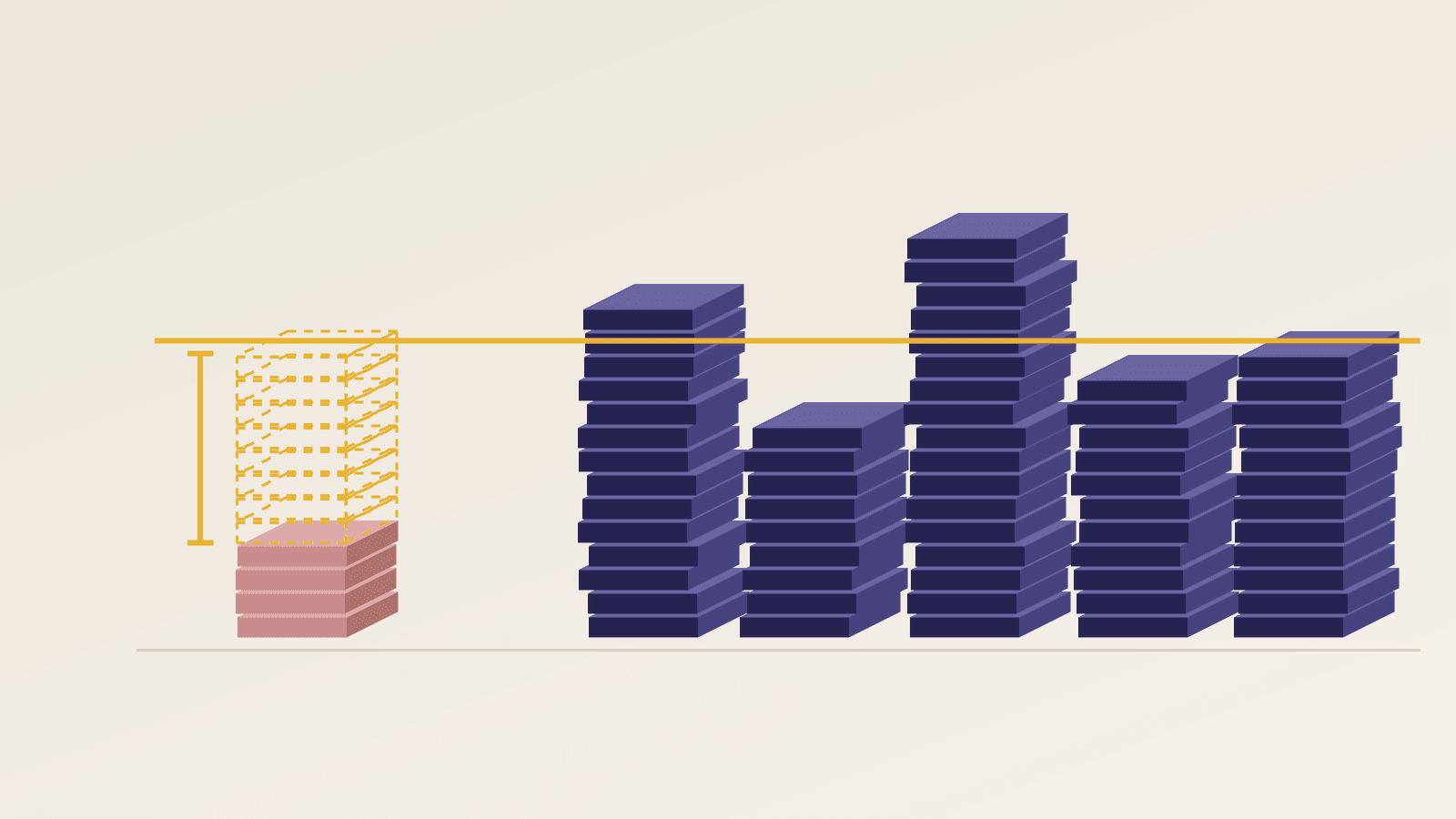
How many backlinks do you need? As many referring domains as the pages already ranking for your keyword have, give or take, which can be 10 or 750. There is no general number. Count the unique sites linking to each of the top results, take the median, and compare it with your own page. That gap is your target, and it changes with every keyword.
We read the eight guides that rank for "how many backlinks do I need" and could be opened on 14 October 2026. Six give a number. None says where its number comes from, all six count links rather than linking sites, and three repeat the same figure: about 40 to 50 links to the homepage.
Short answers#
- Is there a minimum number of backlinks to rank? No. Some pages rank with none, for keywords nobody else is competing on. Majestic's guide answers "one or more."
- Where does "40 to 50 backlinks" come from? None of the three guides that use it gives a source. On Ahrefs' scale it fits keywords around difficulty 35 and nothing else.
- Links or referring domains? Referring domains. Fifty links from three sites are closer to three votes than fifty.
- How many per month? That depends on your target and your timeline, not on a safe rate. Divide the gap by the months you have.
Why there's no single number#
Google doesn't publish a link threshold. Its ranking systems guide says its systems "look at many factors and signals," and that PageRank, its link-based system, "continues to be part of our core ranking systems." Links count. How many you need depends on who else is competing.
The clearest public evidence of how much that varies comes from a vendor. Ahrefs builds its Keyword Difficulty score from "the number of referring domains the top 10 ranking pages have," and publishes the mapping. Each score "corresponds to the estimated number of referring domains (RDs) a page needs in order to get to the first page of search results."
From difficulty 10 to difficulty 90, the estimate rises from 10 referring domains to 756, a 75-fold range. Ahrefs' own example: "If you're aiming for a keyword with KD 40, you're likely to need approximately 56 RDs." The scale isn't linear. Each step of 10 multiplies the requirement by between 1.5 and 2.2, so a keyword that looks a little harder can need twice the links.
Treat the table as an estimate, not a law. Ahrefs' own keyword difficulty guide describes difficulty 50 as top pages with "a couple of hundred backlinks," while the table puts it at 84 referring domains. The two count different things, links and linking sites, which is exactly the confusion most guides fall into.
What the ranking guides say#
We checked each guide for five things. The publishers were BKA Content, Travelpayouts, Majestic, Carril Agency, HigherVisibility, Bulldog Digital Media, Supple and Helium SEO. A ninth, Online Optimism, blocked our requests, so we left it out.
The numbers cluster. BKA Content says "a good website has 40-50 backlinks to its homepage and 0-100 to each subpage." HigherVisibility says "around 50 homepage backlinks and up to 100 backlinks to individual pages." Supple says a homepage "should have at least 40 to 50 links from diverse sources." None cites a study, a dataset or a sample for that figure.
Carril Agency gives ranges by business type, from "20-100 quality backlinks" for local businesses to "500+" for national brands. That's closer to the truth, but still not tied to any keyword.
The studies that do appear are cited for side points, and two are garbled. Bulldog credits "a study by Ahrefs" with the finding that the top page has 3.8 times more backlinks than positions 2 to 10. That figure is from Backlinko's ranking study, which says "the #1 result in Google has an average of 3.8x more backlinks than positions #2-#10." Supple says an Ahrefs study found "over 90%" of pages get zero organic traffic. The Ahrefs study says 96.55%.
Seven of the eight publishers sell link building, SEO services or a backlink tool. Only HigherVisibility links to any Google documentation.
The most useful advice is the part most of them share: five of the eight say to compare your page with the pages already ranking. They just don't turn it into a method.
How to work out how many backlinks you need in 5 steps#
You need a backlink checker that reports referring domains per URL. Most SEO tools do.
Step 1: pick one keyword and one page. The page you want to rank. A homepage and a blog post compete for different keywords and need different numbers.
Step 2: list the top 10 results. Search the keyword logged out, in the country you target. Skip results you can't realistically displace, such as Wikipedia, Reddit threads and the brand's own site for brand terms.
Step 3: record referring domains to each ranking URL. Use the URL, not the whole domain. A page on a big site can rank on the site's strength with few links of its own, and a domain total will mislead you. If most of the top 10 are pages on very strong domains with few links of their own, note it: you'll need more links to your page than the median suggests.
Step 4: take the median and subtract yours. The median ignores the one result with 3,000 links. Your gap is the median minus your page's current referring domains. Backlinko found "the number of domains linking to a page had a correlation with rankings," and Ahrefs reports "a strong correlation" in its own study of two million keywords. Neither proves links cause rankings, so read the gap as a target, not a guarantee.
Step 5: adjust for quality and relevance. Look at what the median page's links are. If they're mostly editorial links from sites in the same field, you need the same kind. Twenty links from relevant pages can beat sixty directory listings. Our high quality backlinks guide has a checklist for this.
If the gap is enormous, pick a narrower keyword where the median is within reach, rank there, and come back. Once you know the number, link building outreach is how most of it gets closed.
Know your gap but not who to ask? GenLink's agent finds sites already writing about your topic and pitches them from your own domain, every day.
A worked example with Ahrefs' numbers#
Say your page has 8 referring domains and you're targeting a keyword with an Ahrefs difficulty of 40. The table puts the requirement at about 56, so your gap is 48. At difficulty 20 the estimate is 22, a gap of 14. At difficulty 60 it's 129, a gap of 121.
The same page, three keywords, gaps of 14, 48 and 121. If you can earn four new linking sites a month, that's under four months for the first keyword, a year for the second and two and a half years for the third.
That arithmetic is the real use of the number: it tells you which keyword to go after first. It's also why a single answer to "how many backlinks do I need" can't be right. Check the actual top 10 before trusting the score, because the table is an average and your results page may differ.
Links vs referring domains#
All six guides that give a number count backlinks. Ahrefs' scale and the correlations both Backlinko and Ahrefs report count referring domains, the number of separate sites linking to you.
The difference matters. A sitewide footer link from one partner can show up as thousands of backlinks and still be one referring domain. Backlinko found that "domain diversity has a substantial impact on rankings." Google's spam policies list "Widely distributed links in the footers or templates of various sites" as link spam. Count sites, and count each site once.
How many backlinks per month?#
There's no safe or ideal monthly rate. Google doesn't publish one; our link velocity guide covers pacing in detail. Work backwards instead: a gap of 48 referring domains over 12 months is four new linking sites a month. If that's beyond what you can earn, extend the timeline or choose an easier keyword. Don't buy links to hit a number. Under Google's policy a paid link that passes credit is link spam, and the December 2022 update says SpamBrain works "to neutralize the impact of unnatural links."
The limits of this evidence#
Our eight guides came from a web search tool on one day, not a verified Google results page, and one more was blocked. Whether a guide "gives a number" or "tells you to benchmark" is our reading. Ahrefs' table is a vendor estimate built from its own link index; other tools see different link counts for the same page. Correlation studies show pages with more referring domains tend to rank higher. They don't show that adding links will move yours by a predictable amount.
Measure the gap, then close it#
How many backlinks you need isn't a fact about SEO. It's a fact about one keyword, measured from the pages already ranking. Find the median, subtract what you have, check what kind of links the winners earned, and set a monthly target you can actually hit.
Turn the gap into a monthly pipeline. Put one agent on your domain to pitch relevant sites every day, and keep every link it earns.
Frequently asked questions#
Can a page rank with no backlinks? Yes, for low-competition keywords. Ahrefs' table starts at zero referring domains for difficulty 0. Its traffic study also found that pages with no referring domains rarely get much search traffic, so for any keyword with real competition you'll need some.
How many backlinks does a new website need? Start with keywords at Ahrefs difficulty 20 or lower, where its table estimates 22 referring domains or fewer. See link building for new websites for where those first links come from.
Do internal links count toward the number? No. The number is external referring domains. Internal links still help Google find and understand your page. See internal linking for SEO.
Is one link from a big site worth many small ones? Sometimes. A relevant editorial link from a well-linked page can outweigh a pile of weak ones, which is why step 5 matters. Never count a link without checking what it is.
What's the fastest way to find the gap? Run step 3 with a backlink checker on the top five results instead of ten, and use the median. Our competitor backlink analysis guide shows the full process.