Link Velocity: How Fast Should You Build Backlinks in 2026?

Every guide has a number for how many backlinks a month is safe. Google has none. What Google, its patent and the ranking guides actually say about link speed, and how to plan a pace that holds up.
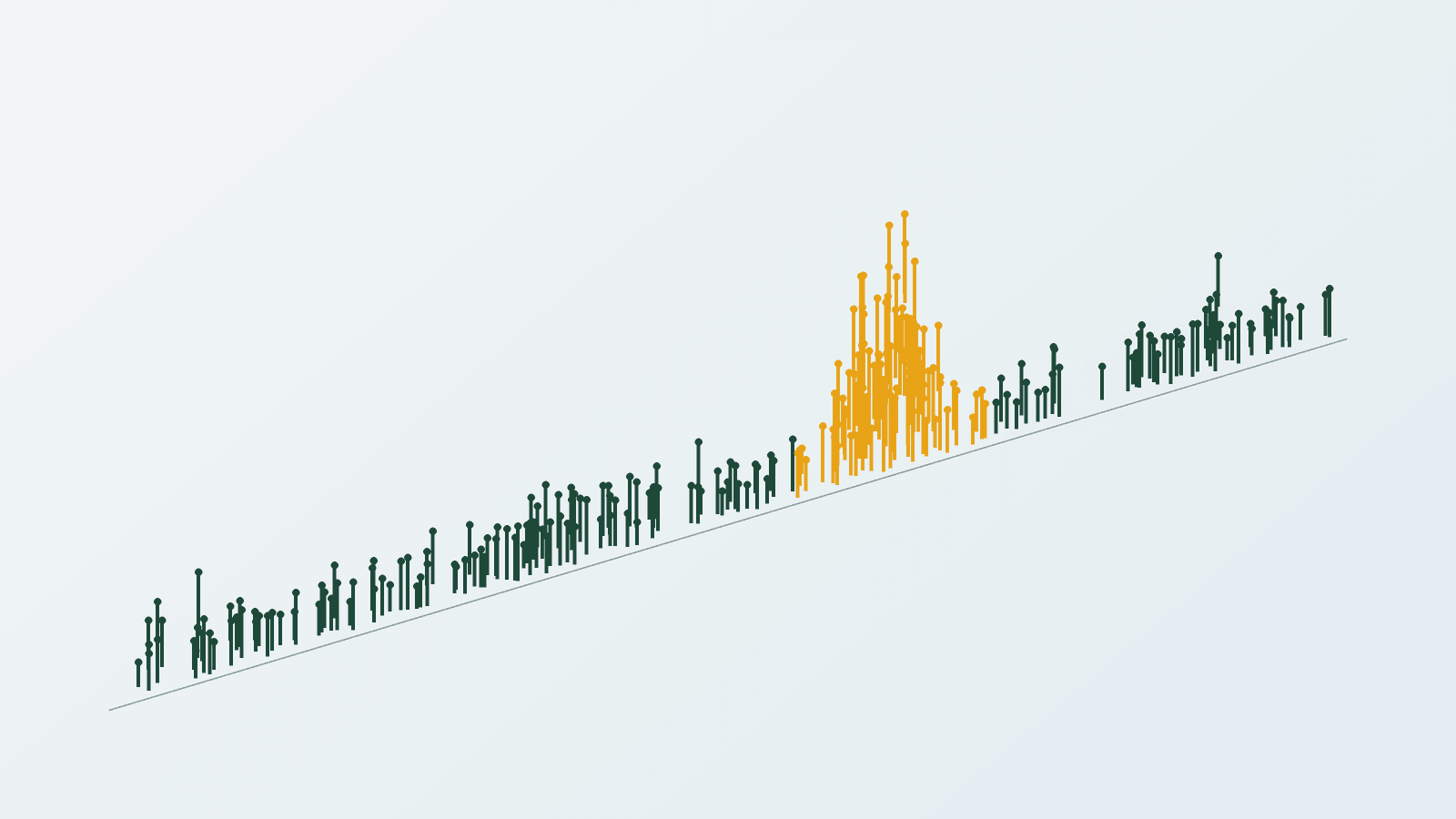
Link velocity is the rate at which a site gains new backlinks over time, usually counted as new referring domains per month. It is a term the SEO industry uses, not one Google publishes. Google has never named a safe pace. What its spam policy targets is links built to manipulate rankings, however fast or slow they arrive.
The short answers, before anything else:
- What is link velocity? How many new links, or new linking sites, you gain in a period, and how that rate changes. Full answer below.
- Is link velocity a ranking factor? Google has not said so. Its one public answer says the rate does not matter, only whether the links are natural. What Google says.
- How many backlinks per month is safe? There is no published safe number. Judge the pace against your own history and the sites you compete with. How to judge it.
- Can getting too many links too fast hurt? Speed alone is not the problem. Links bought or traded at scale are, and they tend to arrive fast. The real risk.
- What if a post goes viral? A burst of links from real coverage is how the web works. Natural spikes.
That covers the search. The method comes next, then the evidence.
What is link velocity?#
Link velocity describes speed: how many new backlinks a site gains in a week, a month or a quarter. Most tools show it as a chart of new and lost referring domains, because one site linking a hundred times is still one site.
The idea behind the term is that a pattern of link growth can look natural or look manufactured. A new site that gains five linking domains a month, then forty in one week after a launch, then settles back, looks like a site people discovered. A site that gains exactly fifty new domains every month, all from unrelated blogs, looks like a site somebody is buying links for.
The intuition is fair. The trouble is turning it into a rule with a number.
Is link velocity a ranking factor?#
Google has never said so. Asked about "200 backlinks in two days" and "link velocity," John Mueller of Google replied, as reported by Search Engine Journal in October 2019: "So it's not so much a matter of how many links you get in which time period. It's really just… if these are links that are unnatural or from our point of view problematic then they would be problematic. It's like it doesn't really matter how many or in which time."
Google's spam policies, last updated 28 August 2026, say nothing about the speed of links at all. They define link spam by purpose: "Link spam is the practice of creating links to or from a site primarily for the purpose of manipulating search rankings."
So where does the idea come from? Mostly from one Google patent, US 7,346,839, "Information retrieval based on historical data", filed in December 2003 and granted in March 2008. It does describe link growth over time, and the word "velocity" appears nowhere in it. Read in full, it argues both sides:
- "While a spiky rate of growth in the number of back links may be a factor used by search engine 125 to score documents, it may also signal an attempt to spam search engine 125."
- "A large spike in the quantity of back links may signal a topical phenomenon (e.g., the CDC web site may develop many links quickly after an outbreak, such as SARS), or signal attempts to spam a search engine."
- "If an unusual spike in the number or rate of increase of links to an authoritative document occurs, then search engine 125 may consider such a document not to be spam."
A patent shows what Google's engineers thought about in 2003, not what Google's systems do today. And even this one treats a spike as a question about the source of the links, not as a penalty in itself.
How many backlinks per month is safe?#
Of the seven ranking guides I read, only one gives a number: SEOptimer says "You should build 3 to 5 backlinks per week for a natural and sustainable growth pattern." It gives no source for the figure. The same page then says "Google doesn't penalize fast growth if it's justified," which undercuts the rule it just set.
Its own example undercuts it further. The guide quotes Steve Morris, founder of the agency NEWMEDIA.COM, on a fintech SaaS client: "Their market average was about 14-18 new referring domains a month, but the top outliers were 25+, and those high-volume spikes typically corresponded with some kind of PR event or product announcement." Put the numbers on one scale and the sites setting the pace in that market sit above the guide's "safe" range.
No fixed rate fits every site. A national news site gains more linking domains in a day than a local plumber gains in a year, and both are normal. The only useful comparisons are your own history and the sites you compete with, which is what the five steps below do.
Can too many links too fast hurt you?#
Speed is not the problem. The source is. Mueller made that point in the same 2019 answer. Someone planning "200 backlinks in two days," he said, "sounds a lot like you're not getting natural backlinks. That sounds a lot like you're going off and just buying them or having someone buy them for you. And that itself would be kind of the thing that we would not be happy with."
In other words, the fast pace was a clue, and the buying was the issue. Bought links, link packages, automated links and swaps are what Google's policy lists, and they are also what tends to arrive in neat, fast batches. Slow them down and they are still bought links. A drip-fed package of paid link insertions is the same purchase spread over more weeks.
What happens when a post goes viral?#
Nothing bad, if the links are real. A study picked up by the press, a tool that spreads on social media or a product launch can bring more linking sites in a week than a year of steady outreach. The patent's own example is a health agency's site gaining "many links quickly after an outbreak."
Two sites can gain links at the same speed for opposite reasons. When your own chart jumps, open the list of new referring domains for that window and check four things:
- Timing. Does the jump start within days of something you did, such as a launch, a study or a press mention?
- Topic. Are the linking pages about your field, and do they mention the thing that happened?
- Mix. A press spike brings news sites, blogs and forums with varied anchors. A bought spike brings similar blogs with similar anchors.
- Decay. Real coverage tails off as the story ages, and the chart settles back to its trend. A package stops when the order ends.
How to plan a link building pace in five steps#
Use this to set a pace you can defend, in any backlink tool.
- Chart your own baseline. Export new referring domains by month for the past year from any backlink tool. Your normal rate, and its normal swings, is the only baseline that applies to you. The backlink audit guide covers the export.
- Chart three competitors the same way. Pick sites that rank above you for your main terms and plot their monthly new referring domains, using the method in the competitor backlink analysis guide. Their pace tells you what is normal in your niche.
- Set the pace by output, not by quota. Decide how many linkable assets and outreach campaigns you can run each month, and let links follow from them. A quota of "50 links a month" is the thing that pushes people towards buying.
- Expect lumps. A data study or a digital PR story can bring more links in a week than a quarter of steady outreach. Plan for spikes after launches instead of spreading them out.
- Watch sources, not speed. Each month, check where new links came from. A rise driven by real coverage in your field is good news. A rise driven by sites you have never heard of, on unrelated topics, is worth a look in the toxic backlinks guide, whatever the speed.
Steady pace, no quota games. The pace that holds up is the one set by real outreach, sent every working day. GenLink runs that for you: it finds the pages worth a link, writes to the person who can add it, follows up and sorts the replies. The free tier runs one agent.
What the top ranking guides on link velocity leave out#
I searched "link velocity" in a US web search on 4 October 2026 and read the top seven results: Ahrefs, Loganix, AIOSEO, SimpleTiger, Respona, Ring Ring Marketing and SEOptimer. Ring Ring Marketing's page is mostly a video, so it had little text to count.
Five of the seven describe link velocity as a penalty or spam trigger. AIOSEO says a sudden rise "may trigger search engines' spam detection algorithms," and SimpleTiger says a spike "can raise red flags with search engines, potentially leading to penalties." Neither cites Google.
Only two of the seven quote any Google source, and both cite the same Mueller answer that says the rate does not matter. Only Ahrefs links the patent, and only Ahrefs and SEOptimer say a natural spike is fine.
Most of the guides warn about speed. The only Google statement any of them quote says speed is not the test.
The limits of this evidence#
Seven results from one search on one day is a snapshot, and one of the seven was mostly video. Mueller's answer reaches us through Search Engine Journal's report, and Ahrefs' line that Gary Illyes called link velocity "a made-up term" is one I could not trace to the original, so I have left it out of the argument. Patents describe ideas, not deployed systems. And Google's silence is not proof that no system looks at link growth over time. On the record, the policy defines link spam by purpose.
Pace follows quality, not the other way round#
Link velocity is a description, not a target. Google judges the purpose of a link, and a bought link is bought at any speed. Build things worth citing, run outreach at a pace you can sustain, and let the chart show whatever shape real interest makes.
Earned links never need pacing. When every link comes from a real pitch to a real editor, the chart can take any shape it likes. Let an agent keep the pitches going while you build the next thing worth citing.
Frequently asked questions#
Does link velocity matter for a new website? A new site starts from zero, so any links look like a jump. That is normal. What matters is where the links come from, not that the line went up.
Should I slow down link building to look natural? No. Holding back links you earned does not make them more natural. If you are tempted to slow down because the links were bought, the problem is the buying, not the speed.
Does losing backlinks quickly hurt rankings? Lost links can lower rankings because the value they passed is gone, not because of the rate. Find out why they dropped, and use link reclamation to win back the ones worth having.
Is link velocity the same as link growth? Mostly. Link growth is the total going up; link velocity is how fast it goes up. Both are only descriptions of the same chart.
How do I check a site's link velocity? Open the referring domains chart in Ahrefs, Semrush or Moz for the domain and read new versus lost by month. Compare sites using the same tool, because each one crawls and counts differently.
Does a drip-fed link package look natural? Spreading paid links over weeks changes the shape of the chart, not what the links are. Paced or not, a paid link is within Google's policy only when it carries rel="sponsored" or rel="nofollow". The dofollow vs nofollow guide explains the attributes.